
Look at the leaves before the flowers.
Flowering gives a moment; foliage helps compose the whole.
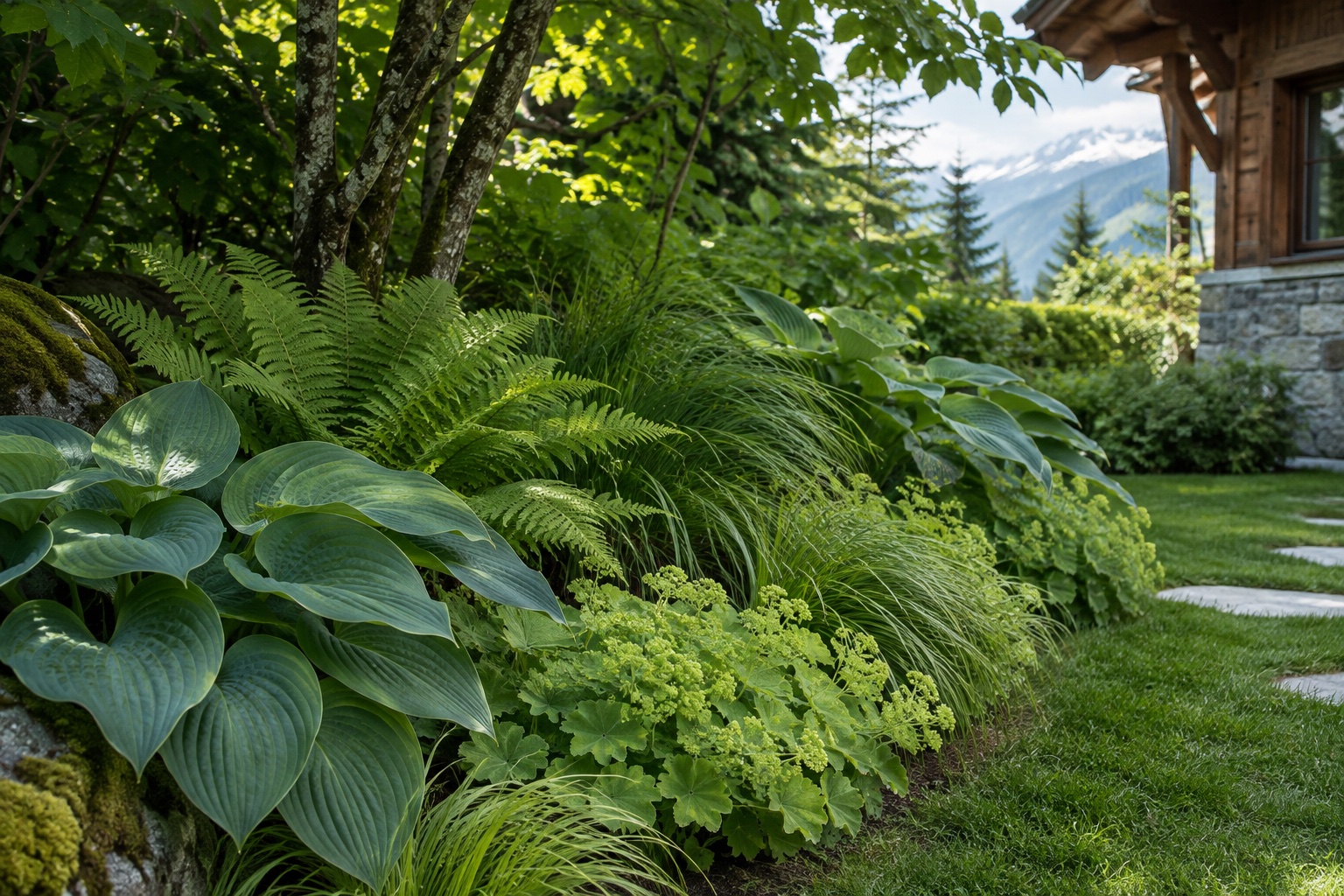
When choosing plants, flowers naturally catch the eye. Try another reading first: volume, leaf texture, tone and the relationship between silhouettes. This gives the border an intention beyond a single picture taken at peak flowering.
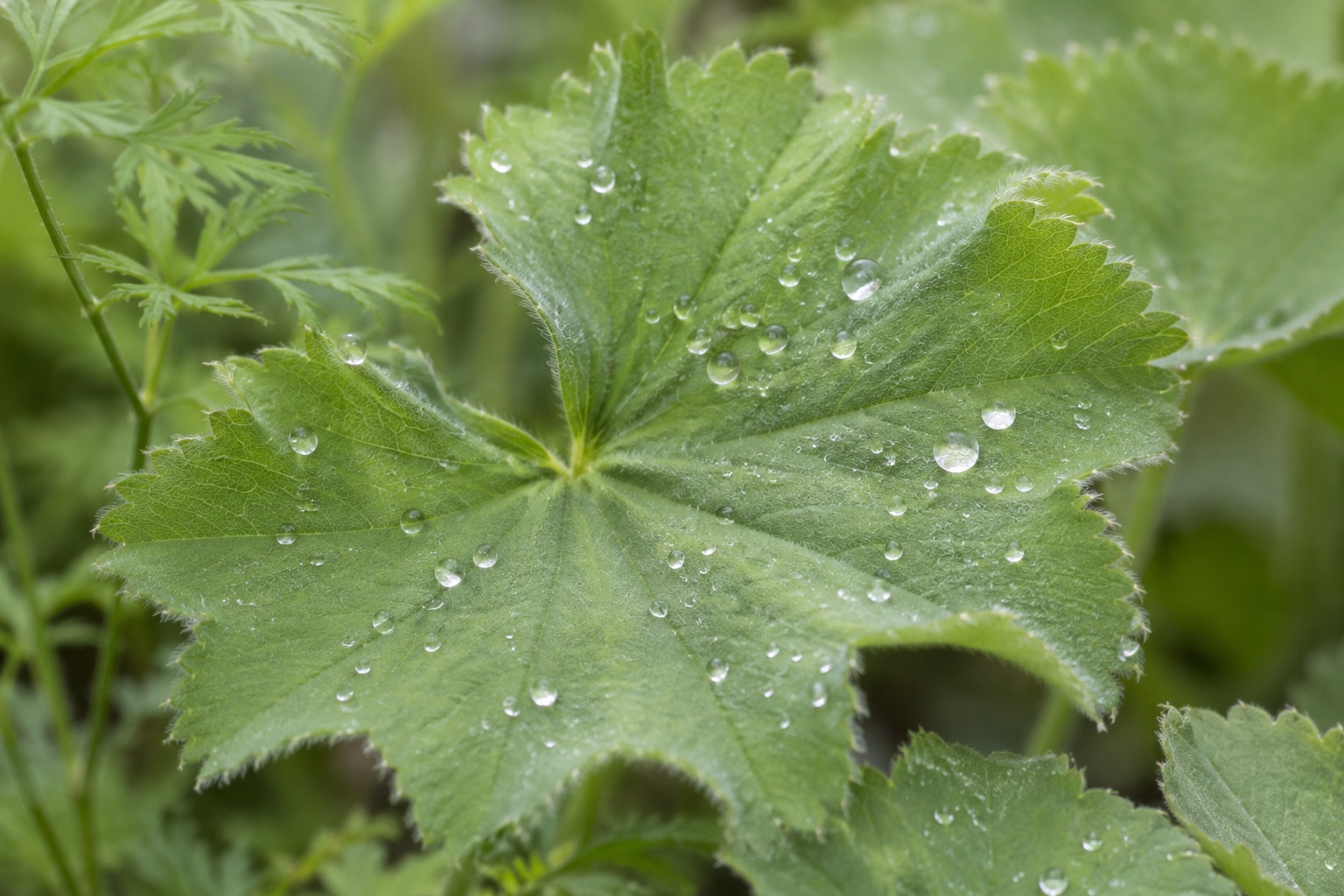
Begin with a few simple relationships: a broad leaf beside a finer texture, a quiet mass behind a lighter plant, a repeated form linking two spaces. Then check that the chosen plants have compatible growing requirements. Composition and cultivation should develop together, so that a beautiful palette also makes sense in the place where it will grow.
Build a small palette on the ground
Place a few suitable plants together in their pots before planting them. Compare leaf size, tone and the spaces between forms. Remove one if the group becomes too busy. Repeat a relationship that works, while respecting each plant’s eventual spread. This simple rehearsal helps a border feel composed even between the moments when flowers take the lead.