

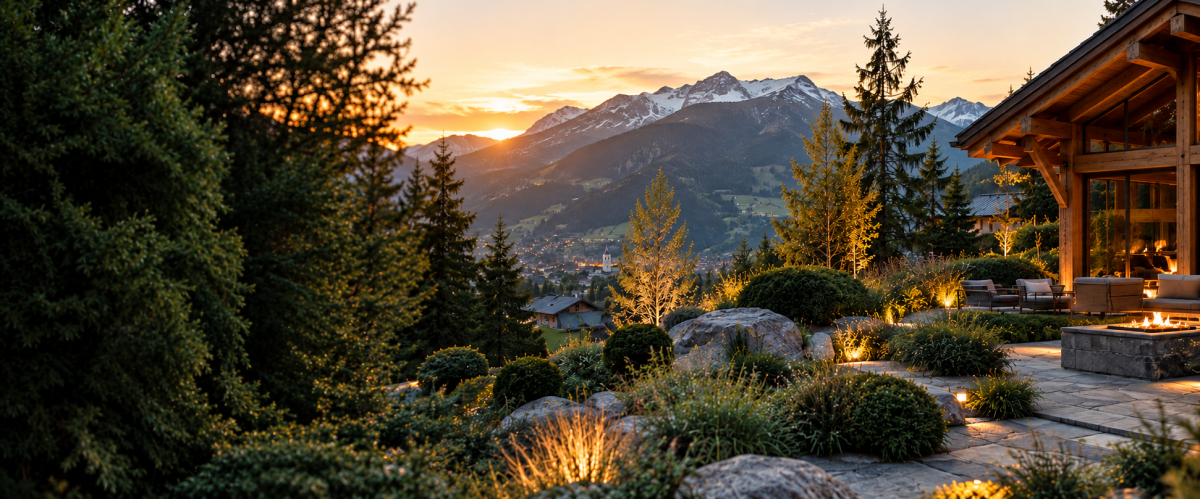
The garden,
through the seasons.
Fifteen first notes on caring for a garden, enjoying life outdoors and choosing plants with attention. Three chapters to explore at your own pace.
Seasonal Stories
01 / 05 NOTES01 / Spring returnsWhen the snow retreats, look first.
Before tidying everything away, notice what winter has left behind.Read the note +Close −
Snow withdraws from one corner while lingering in another. A garden does not wake up all at once. A slow walk reveals damaged branches, debris on paths, ground still holding water and the first signs of growth.
Begin with clear access and careful observation. Cold damage can take time to reveal its full extent, so a tired-looking plant does not always tell you what will recover. Plan the return to regular care around the actual conditions, rather than a fixed date. In an Alpine garden, this patient first look is part of the work.
Photograph the same corners a few weeks apart to follow their recovery.
02 / Summer careWater with attention, rather than habit.
Start with the soil around the plant, rather than the clock.Read the note +Close −
Neighbouring borders can need different care. Recent planting, a terrace pot and an established shrub do not follow the same routine. Sun, wind and recent rainfall matter as much as the month.
Check the soil before watering. When water is needed, direct it to the root zone and give it time to soak in. For a second home, a clear care programme starts by identifying these differences. Note which plants are still establishing and which containers need checking, so that attention goes where it is useful while you are away.
Distinguish newly planted specimens from planting that is already established.
03 / Autumn ritualsFallen leaves still have a story.
Clear the places you use, and consider what the leaves might become.Read the note +Close −
A terrace covered in leaves asks for a different response from a quieter garden corner. Start by identifying the paths, entrances and outdoor spaces that need to stay clear. Thoughtful autumn care is selective, rather than identical everywhere.
Leaves can also become a useful material. Collected in a suitable place, they gradually turn into leafmould. Moisture, time and the type of leaf shape that process. Planning a discreet space for them gives the seasonal tidy-up another purpose, and makes room for the garden’s own materials to stay part of its life.
Decide where collected leaves will go before the autumn clear-up begins.
04 / Before the coldPots need a winter plan too.
Look at the container, its position and its planting together.Read the note +Close −
A pot that works beautifully in summer also needs a place in the colder months. Container-grown roots are more exposed to cold than roots in the ground. Both drainage and the pot’s own resistance to frost deserve attention before winter.
Identify plants that need protection or a more sheltered position. Check that water can escape, and decide on care for each specimen rather than wrapping everything in the same way. At a chalet used for occasional stays, this simple inventory helps make the necessary arrangements before the last visit of the season.
List the plant, drainage, winter position and any protection needed for each pot.
05 / The living soilMulch, in the right place.
Protect the ground while respecting what grows in it.Read the note +Close −
The soil between plants is part of a border’s composition. A suitable mulch can reduce evaporation and weed growth while bringing a quieter finish to the planting. Its colour is only one part of the decision.
Organic materials decompose; mineral materials create a different surface. Choose around the plants and the soil conditions. Apply to weed-free, moist, unfrozen ground, keeping the crowns and bases of stems clear. A considered finish supports the planting rather than burying it, and should be reviewed as the border develops.
Choose for the plants first, then finish carefully around each one.
Garden Stories
02 / 05 NOTES01 / Gather outdoorsA lunch that lingers.
A beautiful table is only the beginning of a place where people want to stay.Read the note +Close −
Imagine the route from the kitchen, chairs being pulled back and the light changing through a meal. An inviting terrace begins with these ordinary gestures. Where will the dishes go? Which route should stay clear? When does shade become welcome?
Try the position before choosing the furniture. A temporary table can tell you more than a finished drawing. Planting can then bring privacy, frame a view or soften an edge. There is a particular pleasure in a space where everything feels easy, and nobody is watching the time.
Try having lunch in the proposed spot before fixing the layout.
02 / House and gardenThe garden begins at the window.
Some of its most important views are composed from inside.Read the note +Close −
A garden is not only seen from the terrace. It accompanies coffee in the kitchen, an hour in the sitting room and the return to a bedroom. These everyday views offer useful starting points for a design.
Choose two or three windows you actually use. Notice what draws the eye, where depth is missing and what deserves to stay open. A plant silhouette, a path or a stone can make a foreground without concealing the wider landscape. The garden becomes a presence inside the house, even on the days you stay indoors.
Photograph the garden at eye level from your favourite windows.
03 / Find your own paceA place of your own within the garden.
The most precious corner is not always the largest.Read the note +Close −
There are places to come together, and places to step away for a while. A bench facing a view, two quiet chairs or a path through planting can make room for different ways of being outside.
Begin with your habits. Where do you naturally pause? At what time does the light feel right? Privacy can come from an orientation, a change in level or a group of plants without enclosing everything. The aim is to feel connected to the garden while having the freedom to find a pace of your own.
Notice one time of day and one place where you already like to pause.
04 / Grow at homeA first kitchen garden can stay small.
A few well-cared-for crops can change your relationship with the garden.Read the note +Close −
Growing your own does not need to begin with a large vegetable plot. A place you can reach easily and care for during your stays is often a better starting point than an ambitious scheme.
List what you enjoy cooking, then consider light, water access and the time available. Crop choices and timings should follow the local growing season. Think about the weeks ahead too: who will water and harvest while you are away? A small kitchen garden becomes a pleasure when it fits naturally into the life of the house.
Start with a few uses and a care routine you can realistically maintain.
05 / Growing up outdoorsMake room for small discoveries.
A children’s garden can begin with observation, long before equipment.Read the note +Close −
An opening bud, a seed being sown, a leaf learning its name: a garden offers simple opportunities to do things together. A small growing space or somewhere to observe without hurrying already gives it another dimension.
Before planning the layout, think about ages, family habits and how adults use the garden too. Routes and views from the house matter alongside play. The space can then evolve, making room for discoveries now and different ways of growing, gathering and enjoying the outdoors later.
Begin with one shared activity to return to on each visit.
Planting Inspiration
03 / 05 NOTES01 / Read the placeThe right plant begins with the right place.
Build a planting palette from the garden itself, rather than a photograph alone.Read the note +Close −
An image suggests a mood; the site sets the conditions. Look at light, wind, mature size and soil before choosing plants. The foot of a wall and an open slope can offer very different situations within the same garden.
Check the hardiness of the actual species and cultivar too. A genus name alone is not a guarantee of suitability. The palette can then stay deliberately focused: a few compatible plants, thoughtfully repeated, often create a clearer composition than a collection of unrelated favourites.
Record five things: light, soil, moisture, cold exposure and mature size.
02 / The Alpine spiritA rock garden that follows the land.
Stone and small plants can form a landscape, even on a modest scale.Read the note +Close −
A rock garden is more than a few stones placed between flowers. It responds to the contours, the views and the growing conditions. Rocks can create small changes of exposure worth understanding before planting.
Many alpines need sharply drained soil and dislike persistent wetness. That matters as much as the mountain mood. For the composition, look for a clear relationship between stones, considered pockets of planting and places where the eye can rest. The mineral structure then becomes the setting for a living scene.
Understand drainage and exposure before composing the plant palette.
03 / Design with movementGrasses offer another way to catch the light.
A lighter presence can change how a border is seen.Read the note +Close −
Not every plant needs a still, solid silhouette. Grasses offer another kind of line: movement, transparency and a softer edge against denser planting. Consider them from windows and seating places as well as from the path.
Choose the species and cultivar for the site. Care also matters: deciduous and evergreen grasses are not all cut back in the same way. Some dry silhouettes can carry visual interest into winter. Thinking about how the planting will change and be maintained belongs in the design from the beginning.
Choose for form and growing conditions, then agree the appropriate care.
04 / Compose a borderLook at the leaves before the flowers.
Flowering gives a moment; foliage helps compose the whole.Read the note +Close −
When choosing plants, flowers naturally catch the eye. Try another reading first: volume, leaf texture, tone and the relationship between silhouettes. This gives the border an intention beyond a single picture taken at peak flowering.
Begin with a few simple relationships: a broad leaf beside a finer texture, a quiet mass behind a lighter plant, a repeated form linking two spaces. Then check that the chosen plants have compatible growing requirements. Composition and cultivation should develop together, so that a beautiful palette also makes sense in the place where it will grow.
Imagine your selection at a moment when none of its flowers are open.
05 / Design through timeA garden that keeps its shape.
Structure matters during the months when the house is used less often too.Read the note +Close −
A chalet garden may be rediscovered after weeks away. What greets you depends on its structure as much as its flowers. Routes, edges and the larger plant silhouettes provide a framework for the eye.
Look at that framework before adding more plants. Does a boundary need definition, a view need opening or two borders need connecting? Evergreens can play a part where their growing requirements suit the site, but they are not an automatic answer for every corner. A garden benefits from a clear intention while still allowing the seasons to change its character.
Draw the garden’s main lines before deciding on the next planting details.
Let’s talk about your garden.
Contact ↗Bienvenue sur notre site
Ut enim ad minim veniam, quis nostrud exercitation ullamco laboris nisi ut aliquip ex ea commodo consequat. Duis aute irure dolor in reprehenderit in voluptate velit esse cillum dolore eu fugiat nulla pariatur. Ut enim ad minim veniam, quis nostrud exercitation ullamco laboris nisi ut aliquip ex ea commodo consequat. Duis aute irure dolor in reprehenderit in voluptate velit esse cillum dolore eu fugiat nulla pariatur